Add Timeless Character With Fired Clay
Brick Veneer in Des Moines and Boone for achieving a traditional masonry look on wood-framed homes without a full brick structure
Beminio Pro Services installs brick veneer for property owners in Boone, Madrid, and the surrounding area who want the durability and appearance of brick without building a double-wythe wall. You apply thin brick to an existing wood-frame or block wall using mortar and metal lath, gaining the color and texture of fired clay while keeping installation time and material costs manageable. Brick veneer is common on ranch-style homes, garage facades, and accent walls where full-thickness brick would require foundation widening or structural retrofit.
The installation mirrors stone veneer but uses uniform brick units instead of irregular stone shapes. Metal lath is fastened to the substrate, a scratch coat is troweled and cured, and each brick is set in a mortar bed with consistent joint spacing. Corners are woven or mitered, and tooled joints are struck to match traditional brickwork. Because thin brick weighs less than full brick, no ledger angle or masonry shelf is required in most residential applications.
If you are adding brick to a new addition, covering dated siding, or matching an older home's original brickwork, contact us to review substrate requirements and brick selection for your project in the Boone area.
How Brick Veneer Is Installed and What You Will Notice
Your wall must be sheathed, wrapped, and lath-covered before any brick is laid. Beminio Pro Services fastens expanded metal lath, applies a scratch coat, and lets it cure before starting the first course. Each brick is buttered with mortar, pressed into place, and checked for level and plumb. Joints are raked or struck to control water shedding and shadow lines, and the surface is brushed clean as the mortar sets.
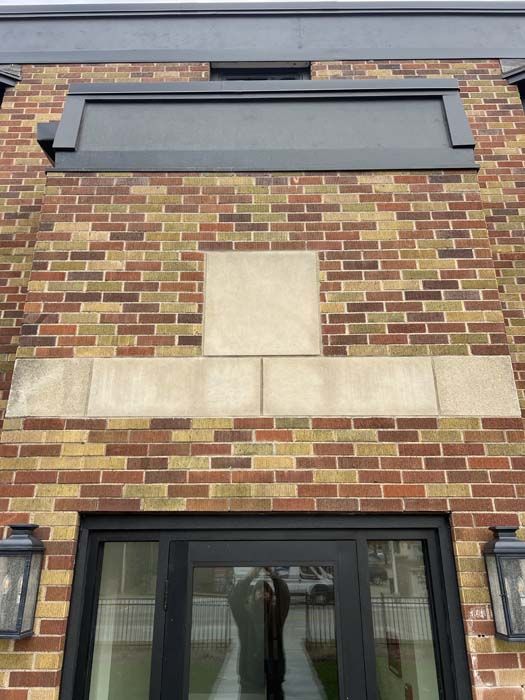
When finished, you will see uniform mortar joints, consistent color banding, and a facade that reads as structural brick from the curb. Water drains through weep vents at the base course, and flashed corners prevent moisture from migrating behind the veneer. The brick resists staining, requires no repainting, and holds color through Iowa freeze-thaw cycles without efflorescence or spalling if the mortar mix and drainage details are correct.
Installation time depends on wall area and brick type. Thin brick units are faster to set than full-depth brick, but corner and window details require careful cutting and fitting. Flashing must be installed during lath prep, and weep spacing must follow masonry standards to prevent moisture trapping.
Common Questions About Brick Veneer
Homeowners in Boone and Madrid often ask how thin brick compares to full brick, what substrates work, and how joints should be finished for Iowa weather.
What is the difference between thin brick veneer and full brick?
Thin brick veneer is typically half an inch thick and weighs a fraction of full brick. It is applied like tile over a mortar bed, while full brick is laid in courses with a structural air gap and metal ties.
How do you prevent water from getting behind the brick?
Flashing is installed at the base of the wall and around openings, and weep holes are placed every few feet in the bottom course. Water that enters the mortar joints drains out through the weeps instead of soaking the substrate.
Why does mortar color matter?
Mortar color affects the overall appearance and can either blend with or contrast against the brick. It also influences how dirt and efflorescence show over time, especially in areas with freeze-thaw cycles like Boone.
When is brick veneer not appropriate?
You should not apply brick veneer to structurally unsound walls, surfaces without proper flashing, or areas where moisture is already migrating through the substrate. The underlying issue must be corrected first.
What kind of maintenance does brick veneer require?
Properly installed brick veneer requires no painting or sealing. Joints may need repointing after several decades, and weep holes should be kept clear of debris and insect nests.
Beminio Pro Services installs brick veneer throughout the Boone and Madrid area. If you are planning a facade update or matching brick on an addition, reach out to discuss substrate evaluation and brick color selection.
